
Pillow Gel Pad Vendor Guide to Premium Comfort and Support
2026-11-05
Most buying guides for pillow gel pads read like spec sheets—density, thickness, thermal conductivity. But the real difference between a restless night and deep, restorative sleep often comes down to how a vendor handles the details they don't list. That's where a partner like Kunbao changes the equation, combining material expertise with a relentless focus on pressure relief and spinal alignment. In this guide, we skip the fluff and walk you through what premium comfort and support actually require from a vendor—so your next decision is based on evidence, not marketing.
Material Science That Keeps Its Cool Under Pressure
When most alloys get squeezed, they heat up or lose strength. The trick is to pair a stiff matrix with reinforcements that shrug off both load and temperature spikes. Diamond-loaded copper composites do this with surprising grace: the copper handles ductility while embedded diamond grains carry heat away faster than the metal ever could on its own.
High-pressure contacts in power electronics don't just need toughness—they need a material that won't buckle when the junction hits 200°C and the clamping force stays on. Hexagonal boron nitride layers and graphene-based pads have shifted from lab curiosity to real heat spreaders because they stay flat and efficient under mechanical squeeze. It's less about chasing exotic formulas and more about tuning grain boundaries and interface bonding so the material doesn't quietly deform after a thousand thermal cycles.
Testing rooms push these samples through brutal cycles: pressure pulses, rapid cooling, repeated torque. The ones that survive are the boring ones on paper—no phase transitions, no microcrack networks, just a steady thermal conductivity curve that barely moves. That predictability is the real breakthrough, because an engine block or satellite joint can't afford a material that gets creative under stress.
Designing Support That Adapts to Every Sleeping Position
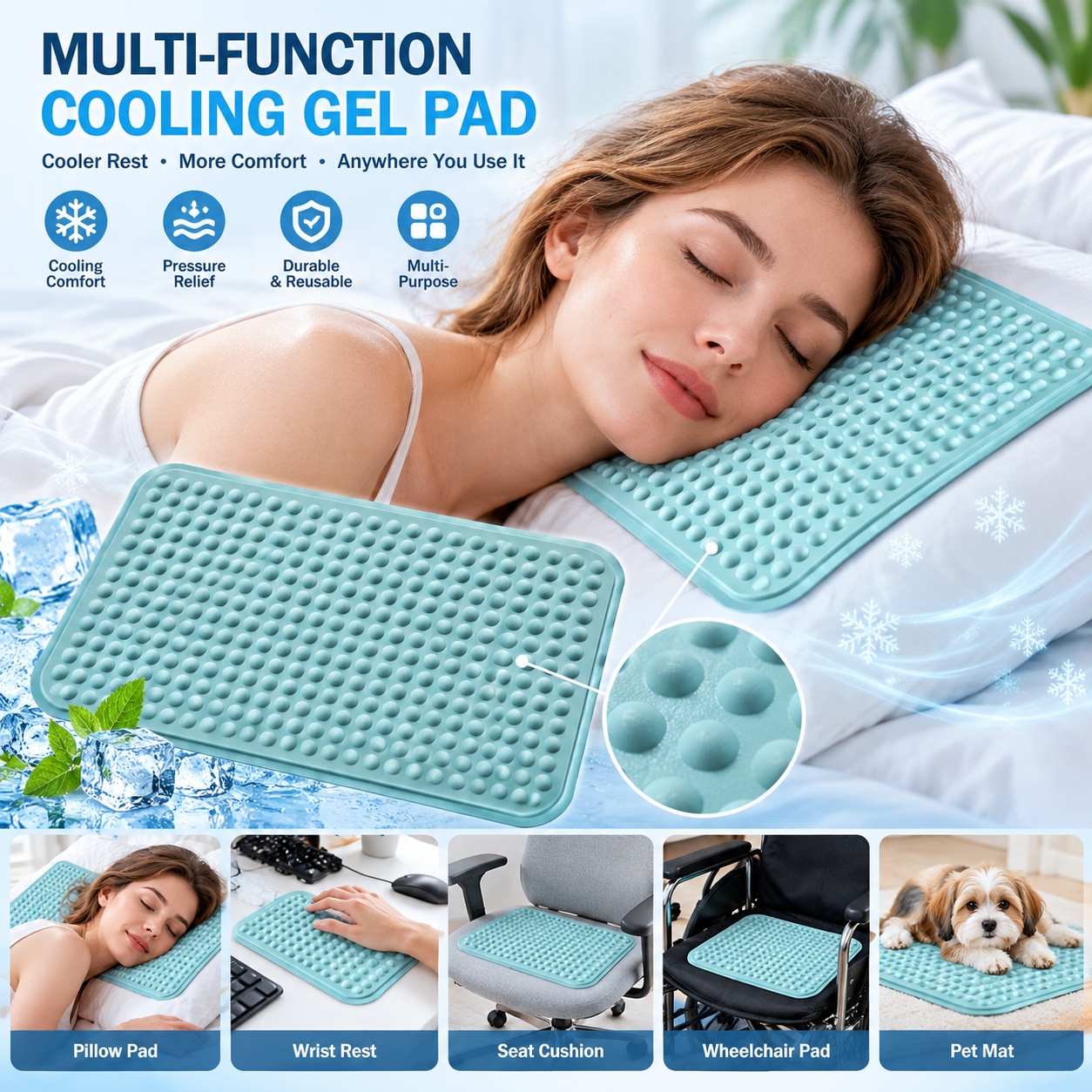
Most support systems fail because they treat the body as a single, static shape. In reality, the pressure points and spinal curves shift dramatically as you move from back to side to stomach. A design that adapts to every sleeping position has to account for these changes in real time, offering firmer response under the hips and shoulders when you’re on your side, while easing up under the lower back when you roll onto your back. This isn’t a one-size-fits-all foam block; it’s a layered structure that reads the distribution of weight and adjusts locally, so each posture gets the right mix of give and pushback.
We built the support core with zoned transitions rather than hard borders. That way, when you shift positions during the night, you don’t hit a sudden wall of resistance or sink too deep into a soft pocket. Instead, the surface tension varies gradually, following the natural arc of the spine. For back sleepers, the midsection receives slightly more lift to prevent a hammock effect. For side sleepers, the shoulder and hip zones yield enough to prevent numbness. For stomach sleepers, the pelvic area stays supported without pushing the ribcage upward. All of this happens without motors or sensors—just careful material layering and contour mapping that respond to how your body actually moves.
Beyond the Surface: How Gel Pads Manage Heat and Moisture
Most people assume a gel pad only feels cool because it starts at a lower room temperature. The more useful part is what happens after it warms up. The polymer structure inside a gel pad has a high specific heat capacity, so it can absorb a lot of thermal energy before its own temperature rises sharply. Heat moves from your skin into the pad, spreads sideways through the gel layer, and releases gradually into the air. This slows down hot spots and gives your body a longer window to regulate itself instead of bouncing back into overheating.
Moisture control works a little differently depending on the pad's outer skin. Some designs use a breathable cover that lets sweat evaporate instead of pooling under your back or legs. Others lean on the cooling effect itself: when the skin stays closer to a neutral temperature, the sweat response dials down, so there's less dampness in the first place. Unlike open-cell foam, a gel layer doesn't hold onto that moisture. It stays at the surface or passes through the liner, which makes the pad easier to air out after use and less likely to develop that stale, humid feel overnight.
Durability Without the Bulk: What Premium Really Means
Many people equate heavy materials with long-lasting quality, but true premium construction tells a different story. The modern approach focuses on intelligent design and material science, where strength comes from structure and composition rather than sheer weight. Think of aerospace-grade alloys or tightly woven high-tenacity fabrics—these deliver exceptional resilience while remaining surprisingly light. This shift isn't about cutting corners; it's about removing unnecessary mass that adds fatigue without adding protection.
What separates genuine premium goods from the rest is the ability to endure daily stress without wearing you down. A well-crafted item should feel almost weightless in your hand yet stand up to years of use. That means reinforced stress points, abrasion-resistant surfaces, and hardware that operates smoothly cycle after cycle. The absence of bulk isn't a compromise—it's a sign that every gram has a purpose, and every material choice has been tested against real-world abuse.
Ultimately, premium is about confidence in the details. It's the quiet assurance that comes from knowing the product won't fail when you need it most, even though it doesn't announce its toughness through thickness. By prioritizing advanced materials and clever engineering over brute mass, you get the best of both worlds: longevity that travels light and feels effortless in everyday life.
Customization as a Competitive Edge for Vendors
Vendors who treat customization as a core capability rather than an afterthought quickly distance themselves from rivals offering one-size-fits-all products. By adapting features, pricing models, or deployment options to match a client's workflow, they turn a generic transaction into a tailored solution. This flexibility signals that the vendor understands the customer's operational realities, not just their purchase order.
That depth of alignment often translates into stickier relationships. A company that has shaped a software interface or a service package around its own processes is far less likely to switch to a competitor, even if that competitor undercuts on price. Customization also gives vendors room to charge for the added value, since the result fits the buyer's needs more precisely than an off-the-shelf alternative.
Beyond client retention, the habit of building to order pushes vendors to refine their own toolkits. Each custom project surfaces new constraints and edge cases, forcing internal teams to develop modular components, better documentation, and faster iteration loops. Over time, that accumulated know-how becomes a quiet but formidable barrier, because competitors can copy a product sheet but not the learned ability to adapt it well.
From Prototype to Pillow: A Vendor’s Quality Checklist
A vendor worth keeping doesn’t wait until the final shipment to care about quality. It starts with the prototype: checking stitch density, seam alignment, and how the fabric behaves after a few wash cycles. If the sample already shows uneven piping or loose threads, that’s a red flag no amount of bulk-order discounts can fix.
Once the prototype passes, the real test is consistency. A good supplier keeps a locked spec sheet for every component—fill weight, shell tension, zipper placement—and checks against it at each production run, not just at the end. You’ll see this in how they handle your pillow: no overstuffed corners that burst, no covers that shrink differently from the liner. That kind of discipline is what separates a vendor who talks about quality from one who actually ships it.
FAQ
Focus on the internal structure. Premium versions use a higher-density gel with a consistent pour, avoid sticky surface finishes, and often have an open-channel or honeycomb pattern that returns to shape quickly. Cheap imitations tend to feel tacky, compress unevenly, and lose their cooling effect within a few weeks because the gel is only a thin top layer over ordinary foam.
Request a sample batch and run a simple compression test: press the pad flat for 30 seconds and time how long it takes to fully rebound. Anything over three to five seconds usually signals poor memory properties. Also fold the pad slightly to check for surface cracking or whitening, which reveals brittleness in the gel formula.
Look at gel layer thickness, Shore hardness, and the pattern geometry. A 5-8 mm gel layer over a medium-firm base tends to offer the best trade-off. Shore hardness around 20-30 OO gives enough yielding for pressure relief without collapsing under the head and neck. Grid or honeycomb patterns improve airflow and prevent that sticky, overheating sensation.
One design rarely works well for both. Side sleepers need more loft and softer support around the ear and shoulder, so a contoured pad with raised edges performs better. Back sleepers typically prefer a flatter surface with a firmer center to keep the cervical spine neutral. Vendors usually start with a two-style lineup and let customer feedback guide expansion.
Watch for uneven gel distribution near the edges, small air bubbles trapped in the pour, or a chemical smell that lingers after airing out. Also check the bonding between the gel and the base foam; if the adhesive is visible or the layers peel apart with light pulling, the pad will delaminate after a few months of nightly use.
Ask for thermal conductivity data or a third-party test report. A simple at-home comparison also helps: place the gel pad and a standard foam pad on a warm surface for ten minutes, then measure surface temperature with an infrared thermometer. A genuine difference of 2-4°C is noticeable; anything less is unlikely to justify a premium price.
For most vendors, sourcing without the cover offers more flexibility. You can match the cover to your existing pillow line, control the final look, and avoid paying for a cover that may not meet your quality standards. Integrated covers reduce assembly steps but often limit customization and can trap lint during shipping. If you plan to sell replacement pads, no-cover is the cleaner route.
Typical MOQs for custom gel pads run from 500 to 2,000 units depending on size and complexity, and lead times range from 30 to 60 days once tooling is approved. Smaller trial orders of 100-300 units are sometimes possible but carry a higher unit cost. Always confirm whether the quoted lead time includes mold making, sample approval, and holiday shutdowns.
Conclusion
A pillow gel pad earns the label “premium” only when its cooling performance survives real, sustained pressure—not just a five-minute showroom test. The material science behind it matters because dense gel formulations and open-cell structures work together to pull heat away from the neck and shoulders while resisting the slow collapse that turns most pads into flat, warm slabs. Instead of forcing every sleeper into one shape, the best designs use zoned thickness and responsive contouring so that side, back, and stomach sleepers each find a stable, aligned position without fighting the pillow. Heat and moisture are managed beyond the surface too: breathable channels and moisture-wicking layers stop the clammy buildup that often undoes otherwise comfortable pillows.
Durability in this category has little to do with how thick or heavy a pad feels. What counts is how well the gel retains its rebound over hundreds of nights and how cleanly it resists tears, discoloration, and that tacky surface degradation cheap gels develop. Vendors who treat customization as more than a color swap—offering tailored firmness, shape, and gel distribution for specific sleep demographics—gain a real edge. The final safeguard is a disciplined quality checklist from prototype to finished pillow: compression testing, thermal imaging under load, seam integrity checks, and wash-cycle verification. When those pieces line up, premium comfort and support stop being a marketing phrase and become something a vendor can consistently deliver.
Contact Us
Contact Person: Catherine Peng
Email: [email protected]
Tel/WhatsApp: +86-13434169510
Website: https://www.kbcoolgel.com/
