OEM Steel Handrail: A Complete Guide to Custom Fabrication and Installation
2026-11-02
When a standard steel handrail won't fit your project's unique geometry, OEM fabrication is the answer—but only if you know what to ask for. From material grades to welding standards and installation sequencing, the path to a flawless custom handrail is full of hidden decision points. This guide, built on the real-world experience of Sino Grating, walks you through each critical stage, so you can move from drawing board to final inspection without second-guessing.
Decoding Custom Steel Handrail Specifications Before You Build
When you sit down with a set of custom steel handrail drawings, the first thing to decode is dimensional language. 'Overall height' might sound simple, but it can be measured from finished floor to top of rail or from stair nosing—two very different points. Look for whether the drawing calls out clear opening between balusters or center-to-center spacing, since that affects both safety and visual rhythm. Also check how the rail terminates: does it return to the wall, die into a newel, or wrap around a corner? These small notes determine how the pieces get cut and welded before finishing.
Material callouts hide a lot of assumptions. A note like 'A36 steel, primer only' tells an experienced fabricator that the client expects an industrial look and is okay with eventual surface patina, whereas '316 stainless, brushed finish' means the handrail will live outdoors near salt air or needs a near-bulletproof interior finish. Pay attention to wall thickness too—Schedule 40 pipe and 16-gauge tube feel completely different in the hand and have different welding behavior. If the spec doesn't mention grain direction on stainless, ask; a vertical grain on posts and horizontal grain on rails can clash.
Finally, don't skip the installation and loading notes buried at the bottom of the spec. Requirements like '50 lb per linear foot lateral load' or 'point load of 200 lb applied in any direction' aren't boilerplate—they tell you how stiff the assembly must be and whether intermediate posts are needed. Tolerances for field welds, anchor embedment depth, and expansion joint placement are the difference between a rail that fits the first time and one that has to be cut and re-welded on site. Decode these details before you order material, and the build itself becomes straightforward.
Steel Selection: Balancing Strength, Weight, and Weather Resistance
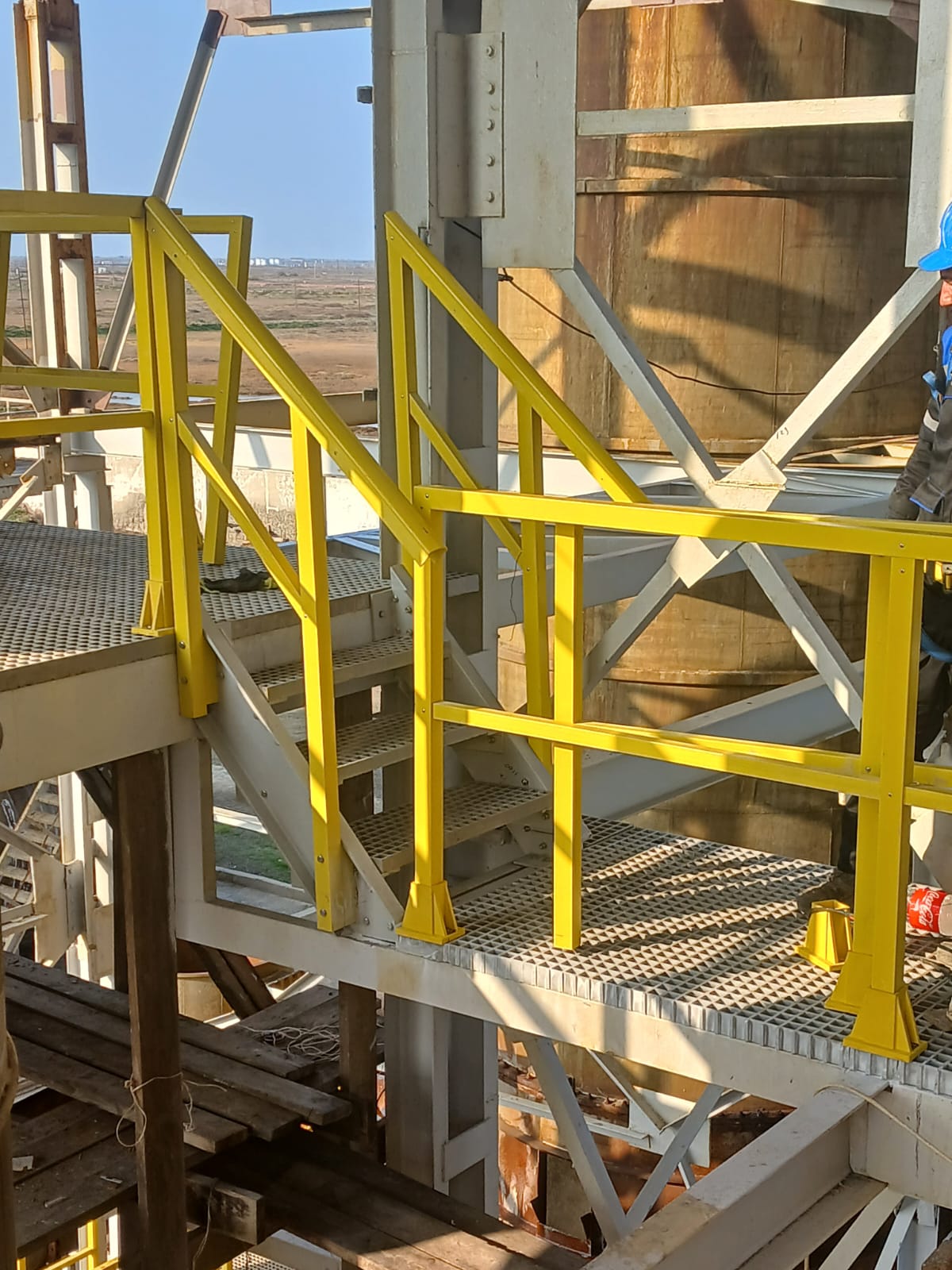
Choosing the right steel often comes down to three competing demands: you want enough strength to handle the load, low enough weight to avoid overbuilding, and sufficient weather resistance to survive the environment. Push too hard on any one of these and the others suffer—high-strength alloys can be heavier and trickier to protect, while lightweight options may dent or corrode faster. The real skill is understanding which trade-offs your project can tolerate, because the “perfect” steel rarely exists in practice.
For outdoor structures, weather resistance usually gets the first vote. A coated carbon steel might be cheap and strong, but once the galvanizing or paint is scratched, rust starts working underneath. That pushes many builders toward weathering steels like Corten, which form a stable oxide layer that slows further corrosion—though they still need careful detailing to avoid trapped moisture. In coastal or industrial settings, even those may fail, leaving stainless or specialized alloys as the only sensible choices despite the higher cost and sometimes lower yield strength.
Weight tells a different story, especially in movable equipment or long-span roofs. Here a thinner, higher-strength steel can cut mass without sacrificing load capacity, but you pay for it in fabrication difficulty and increased sensitivity to fatigue or buckling. The best selections often come from testing small prototypes in real conditions rather than relying on catalog numbers alone. A steel that performs beautifully on a spec sheet can still warp, pit, or crack if the environment or welding process wasn’t fully considered from the start.
Fabrication Techniques That Separate Precision Work from Guesswork
Precision starts long before the first cut. It lives in the habit of measuring twice, checking the tool's zero point, and choosing a reference surface that actually matters. Too many shops treat the drawing as a suggestion, then wonder why parts drift out of tolerance. The difference isn't luck—it's a system. Clamping pressure, thermal drift, and even the order of operations get mapped out before any material touches the spindle. When the setup is treated as part of the design, guesswork quietly leaves the room.
Then there's the feedback loop. Cheap fixtures and dulled tooling create a false sense of stability, because the operator compensates on the fly. But that compensation is exactly where errors hide. A precise fabricator instead stops the process, measures the actual result, and adjusts the fixture or toolpath—not the part after the fact. Comparing a part to a shadow board or a go/no-go gauge is fine for sorting, but it does nothing to improve the next cycle. Real control comes from reading the tool wear pattern, the chip color, the torque curve, and letting those signals drive a change before a scrap bin fills up.
Finally, documentation separates the professionals from the button-pushers. When a process is written down with actual numbers—clamp force, spindle speed, ambient temperature, insert life—it becomes repeatable by anyone on the floor. Without that, every new job is a fresh experiment. Precision isn't a personality trait. It's a set of fabrication techniques that leave nothing to chance.
Anchoring and Alignment: The Installation Details Nobody Should Skip
Most installers spend their energy on the big, visible tasks—leveling the frame, torquing the main bolts, checking the plumb line. But anchoring and alignment are where a machine either settles into decades of reliable service or starts chewing through bearings within the first six months. If you don’t get the anchor bolts seated in clean, properly sized holes, and if you don’t dial in the alignment before the grout sets, you’ll be chasing vibrations and hot spots forever. It’s the kind of detail that doesn’t show up on a spec sheet until the repair bill does.
Start with the anchor pattern. Mark the centerlines from the actual baseplate, not from a paper template—paper stretches, ink smears, and a 1/16-inch error at the anchor becomes a 1/4-inch headache at the coupling. Use a transfer punch through the baseplate holes whenever you can. Then clean out the drilled hole until a gloved finger comes back without dust. Chemical anchors fail quietly when they bond to dust instead of concrete, so that extra minute of brushing and blowing is cheap insurance.
Alignment is not a one-and-done check. After you torque the anchors, the baseplate moves. After you pour grout, it moves again. Run a dial indicator across the shaft or rail, then wait an hour and do it again before you connect anything. Watch for soft foot conditions—if one corner lifts when you loosen a bolt, you don’t have an alignment problem so much as a flatness problem. Shim it, don’t yank it down with bolt tension. The goal is to have the machine sit in a neutral, relaxed position with all feet carrying equal load. If you can’t slide a 0.002-inch feeler gauge under any corner, you’re probably close enough for the factory warranty—but not necessarily for the next ten years.
Meeting Code Without Sacrificing the Clean Lines You Want
You don't have to choose between a compliant structure and a design you actually like. The trick is integrating code requirements into the architecture itself, so they read as intentional choices rather than afterthoughts. For example, a required fire-rated wall can become a sleek, floor-to-ceiling panel that anchors the room, or a handrail can be recessed into a groove instead of bolted on as an eyesore. When you treat regulations as raw material, the result feels seamless and considered.
Start by mapping out the non-negotiables early—clearances, egress paths, material ratings—then sketch over them. Instead of letting a sprinkler line ruin a ceiling, design a slim linear track that houses both the sprinkler and ambient lighting. If code demands a certain stair rise and run, play with the profile of the treads or the transparency of the balustrade to keep the visual flow open. Every constraint becomes an opportunity to refine the detail, not fight it.
The real difference is in the joints and transitions. A clean line isn't about hiding everything; it's about resolving where things meet. Use shadow gaps, aligned edges, and consistent materials to make code-driven elements disappear into the larger composition. The goal is a space that passes inspection without ever making you think about the code behind it.
Long-Term Care for Steel Handrails in High-Traffic Spaces
Steel handrails in corridors, stairwells, and transit hubs rarely fail from a single impact—they wear down in predictable spots. The bends just past each landing, the undersides near doorways, and the last few inches before a wall mount all collect oils, abrasion, and micro-scratches that eventually break through the coating. A monthly walk-through with a bright flashlight makes these trouble areas easy to catch before rust gets a foothold. Pay particular attention to joints and mounting plates, where slight flexing can crack paint or loosen anchors over time.
Cleaning should stay deliberately simple. A soft cloth, warm water, and a pH-neutral detergent handle most grime without stripping the protective finish. Avoid anything with bleach or ammonia, which can pit the surface and invite corrosion in hidden crevices. When scratches appear—and they will—touch them up the same week rather than waiting for a maintenance window. For powder-coated steel, a small bottle of matched touch-up paint works well; for stainless steel, a gentle pass with a non-metallic abrasive pad restores the grain without over-polishing.
Every six months, check the hardware itself. Tighten fasteners to the manufacturer's torque spec, replace worn nylon washers, and listen for hollow rattles that signal a loose anchor. A thin coat of paste wax on exposed surfaces adds a sacrificial layer that takes the abuse instead of the steel. If a section shows repeated damage in the same spot—like a stairwell where bags and keys swing into the rail—consider a local guard sleeve or a change in mounting position rather than endlessly repainting the same scar.
FAQ
OEM means the fabricator builds the railing to your specifications rather than offering a fixed catalog design. You supply dimensions, load requirements, bracket locations, and finish preferences; the shop handles engineering, cutting, welding, and pre-finishing. The main shift is that you get a part made for your exact job instead of adapting a stock product to fit.
For interior dry locations, standard A500 or A513 carbon steel with a 16-gauge or 11-gauge wall is usually enough. For exterior or coastal settings, switch to 316 stainless or use carbon steel with a hot-dip galvanized base and a marine-grade topcoat. Wall thickness below 16-gauge tends to flex too much between posts, so avoid it for grab rails.
Welded fabrication gives cleaner lines and fewer visible fasteners, but it requires touch-up finishing on site and is harder to adjust after install. Mechanical connections using internal sleeves or bracket kits speed up assembly and allow field trimming, but the joint hardware remains visible. Go welded for showpiece interior stairs, and modular for long exterior runs where site access or schedule is tight.
Hot-dip galvanizing under a polyester powder coat is the most durable combo for salt air and constant touching. A two-coat epoxy primer with urethane topcoat also works inland. Avoid thin enamel-only finishes in coastal areas because scratches quickly turn into rust blooms. For stainless handrails, electropolishing resists fingerprints and chloride pitting better than a mill finish.
Yes, but you need to fix the geometry early. ADA-style grab rails need a 1 1/4 to 1 1/2 inch outside diameter, a 1 1/2 inch clear space from the wall, and a height between 34 and 38 inches. Local codes may add rules for extensions at landings, end returns, or load ratings. Send the fabricator your applicable code sections and a field sketch showing wall anchors and stair pitch before approval drawings.
A straightforward straight-run railing usually takes four to six weeks after drawing sign-off. Curved or radiused sections, custom brackets, or multi-stage finishes add two to three weeks. The most common delays come from late hardware approvals, changes to post locations after fabrication starts, and waiting for powder coat or galvanizing batches to fill at the finisher.
Do not use short wedge anchors in concrete edges; use epoxy-set threaded rod or through-bolts with an embedment depth of at least 4 inches. On wood blocking, skip drywall screws and instead lag into solid framing behind the finish surface. For steel stringers, avoid welding brackets on site if the railing is already powder coated; use pre-welded plates and bolt connections. Also leave the top rail continuous and shim mounts rather than forcing a twisted rail into place.
Wipe the rail monthly with a damp cloth and a mild pH-neutral cleaner, then dry it off. Inspect joints, end caps, and bracket connections for hairline cracks or scratches. Touch up any bare metal immediately with a zinc-rich primer or cold galvanizing spray, then apply matching topcoat. For exterior rails near salt water, rinse with fresh water every two weeks during humid seasons.
Conclusion
A well-executed OEM steel handrail starts well before the first cut. Decoding the spec sheet means understanding site measurements, load paths, and how the railing will meet adjacent surfaces. Then comes steel selection—carbon steel for interior economy, 316 stainless for coastal or high-moisture environments, or a galvanized finish where durability has to live behind paint. Fabrication precision shows up in full-length welds, controlled heat input, and careful grinding so that joints disappear into clean lines rather than visible lumps. Taking shortcuts here leaves warping and misalignment that no field adjustment can fully hide.
On site, anchoring and alignment become the details that determine whether the handrail feels solid or slightly loose. Embedded plates, proper fasteners, and shimming to true vertical matter more than many installers admit. Meeting code does not have to mean bulky profiles—graspable dimensions, height consistency, and correct baluster spacing can be achieved with slim, modern sections if planned early. After handover, long-term care is mostly about routine inspection: checking welds and coatings for hairline cracks, cleaning grime from high-contact areas, and touching up scratches before corrosion gets a foothold. This combination of careful specification, controlled fabrication, and disciplined maintenance keeps an OEM steel handrail performing well in high-traffic spaces for years.
Contact Us
Contact Person: Nicholas Zhu
Email: [email protected]
Tel/WhatsApp: 18921275456
Website: https://www.sino-grate.com